

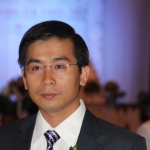
Dr. Trung Q. Duong
Dr. Trung Q. Duong (IEEE Fellow, IET Fellow, CAE Fellow, EIC Fellow, and AAIA Fellow) is a Canada Excellence Research Chair and Full Professor at Memorial University of Newfoundland, Canada. He is also an adjunct professor at Queen’s University Belfast, UK, and Edinburgh Napier University, UK, and a visiting professor under eminent scholar program at Kyung Hee University, South Korea. His current research interests include quantum optimisation and machine learning in wireless communications. He is an author/co-author of 700+ publications with 28,000+ citations and h-index 89. He has served as an Editor for many reputable IEEE journals (IEEE Trans on Wireless Communications, IEEE Trans on Communications, IEEE Trans on Vehicular Technology, IEEE Trans on Network Science and Engineering, IEEE Network, IEEE Communications Surveys & Tutorials, IEEE Communications Letters, and IEEE Wireless Communications Letters) and has been awarded best paper awards in many flagship conferences including IEEE ICC 2014, IEEE GLOBECOM 2016, 2019, and 2022. He was the only UK-based researcher awarded both the Research Fellowship and Research Chair from the Royal Academy of Engineering. In 2017, he was awarded the Newton Prize from the UK government. He is currently the Editor-in-Chief of IEEE Communications Surveys & Tutorials and an IEEE ComSoc Distinguished Lecturer. He is a fellow of the Institute of Electrical and Electronics Engineers (IEEE), the Institution of Engineering and Technology (IET), the Canadian Academy of Engineering (CAE), the Engineering Institute of Canada (EIC), and the Asia-Pacific Artificial Intelligence Association (AAIA). He is the Founding Director of Quantum Communications and Computing Center (QC3).

Dr. Bhaskara Narottama
Dr. Bhaskara Narottama (Member, IEEE) received the Bachelor’s degree in Telecommunication Engineering and the Master’s degree in Electrical and Telecommunication Engineering from Telkom University, Indonesia, in 2015 and 2017, respectively, and the Ph.D. degree in IT convergence engineering from the Kumoh National Institute of Technology, South Korea, in 2022. He is currently a Senior Research Fellow at Quantum Communications and Computing Center (QC3), Memorial University of Newfoundland, Canada. He was a Post-Doctoral Fellow with the Institut National de la Recherche Scientifique, Canada. His research interests include quantum-enabled machine learning, integration of quantum communication and learning, future antenna systems, physical-layer security, quantum-inspired algorithms, multiple access techniques, and device-to-device communications.
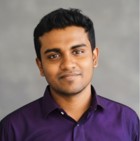
Sasinda C. Prabhashana
Sasinda C. Prabhashana (Student Member, IEEE) received the B.Sc. Eng. (Hons.) degree in Electrical and Electronic Engineering in Sri Lanka, graduating as the Field Top and Gold Medalist. He is currently pursuing the Ph.D. degree in Electrical Engineering with the Faculty of Engineering and Applied Science, Memorial University of Newfoundland, Canada. His research interests include quantum computing, artificial intelligence, quantum machine learning, and next-generation communication systems. He has published his research in top-tier international journals and conference venues. He is also a recipient of the Best Paper Award at the IEEE ICC 2025 Workshops.
